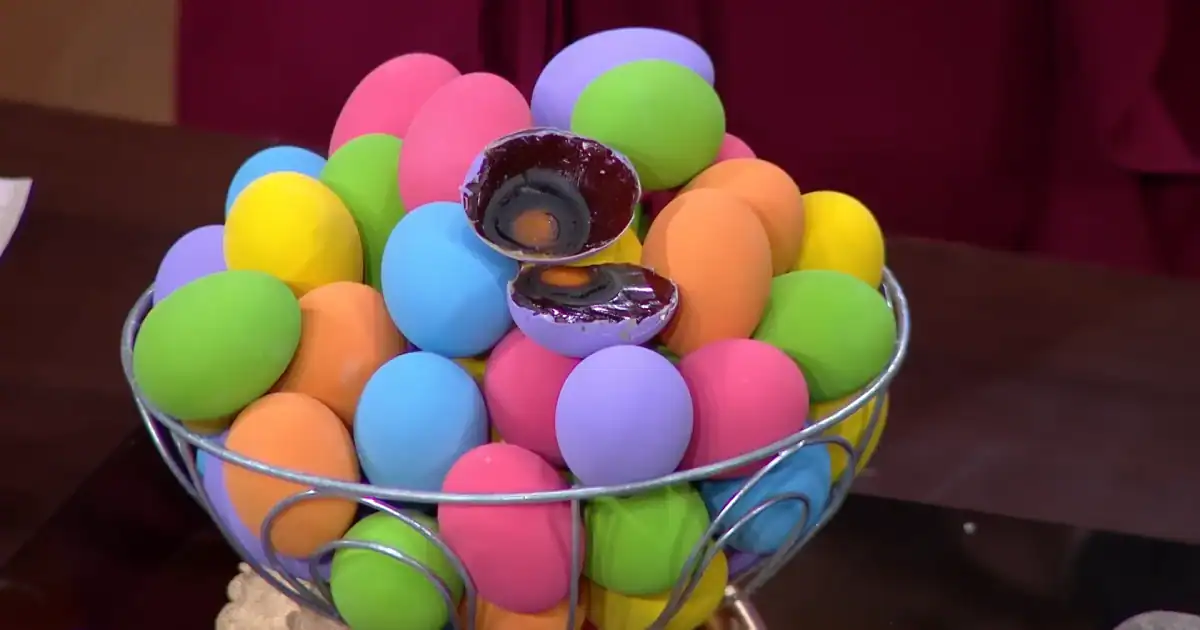
Thai Easter Eggs
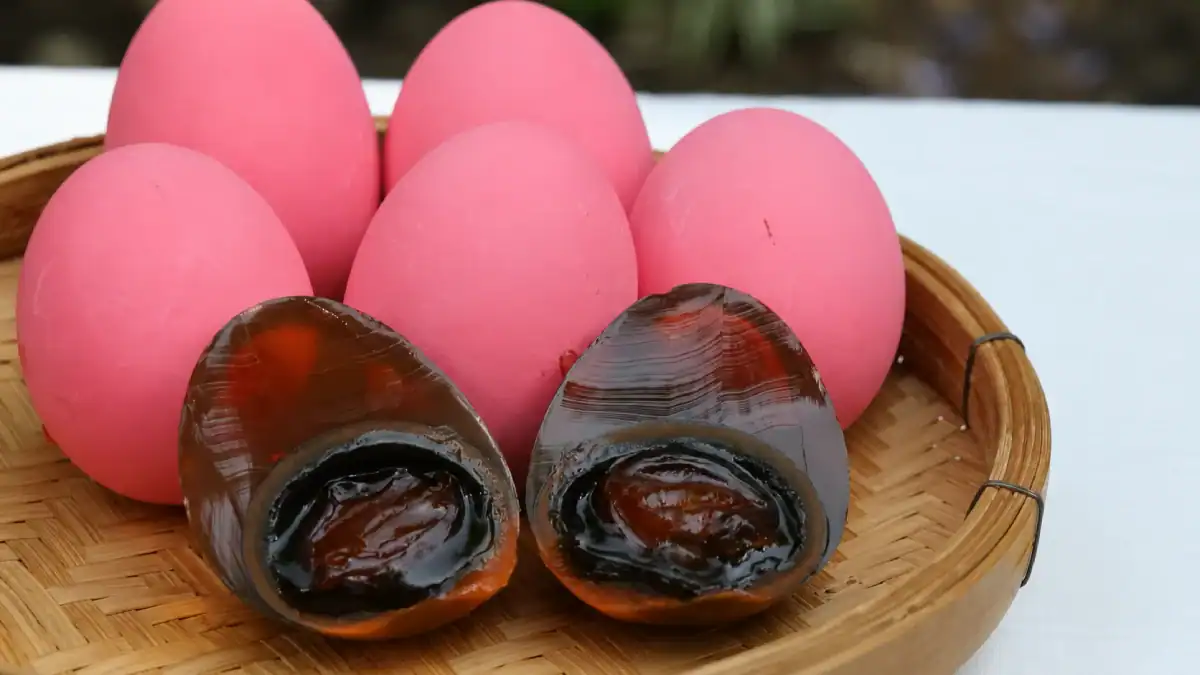
Did those beautiful pink eggs at 7-Eleven catch your eye, too? Believe it or not, these aren’t Thai Easter eggs or regular Easter eggs. So what are they? They’re what are known as “century eggs,” usually made from duck eggs, and their pleasant pink color is the only thing that sets them apart from fresh eggs.
Khai Yiao Ma
ไข่เยี่ยวม้า
Century Egg
History
Legend has it that they were discovered in China about 600 years ago in Hunan Province during the Ming Dynasty. A farmer found duck eggs in a lime pit used in the construction of his house. When he tasted them, he discovered they were edible. He repeated the process by covering raw eggs with a mixture of lime and salt for two months. It is, therefore, a Chinese specialty that gradually became popular in Thailand and Cambodia.
Production
Essentially, this is a form of food preservation. First, raw chicken, duck, or quail eggs are coated in a special alkaline mixture of clay or loam, ash, lime, salt, tea leaves, and rice husks. The eggs are then left to mature for at least three months. The coating around the egg hardens and triggers a fermentation process that raises the alkalinity of the egg’s interior to an incredible pH of 12.
Fermentation
To be precise, this is not fermentation in the true sense of the word, as no microorganisms are involved. The high pH caused by lime and lye reliably kills any bacteria or mold. It is therefore a purely chemical breakdown (alkaline hydrolysis) of proteins under sterile conditions. That is why the eggs do not spoil, but merely change their structure.
What does it look like?
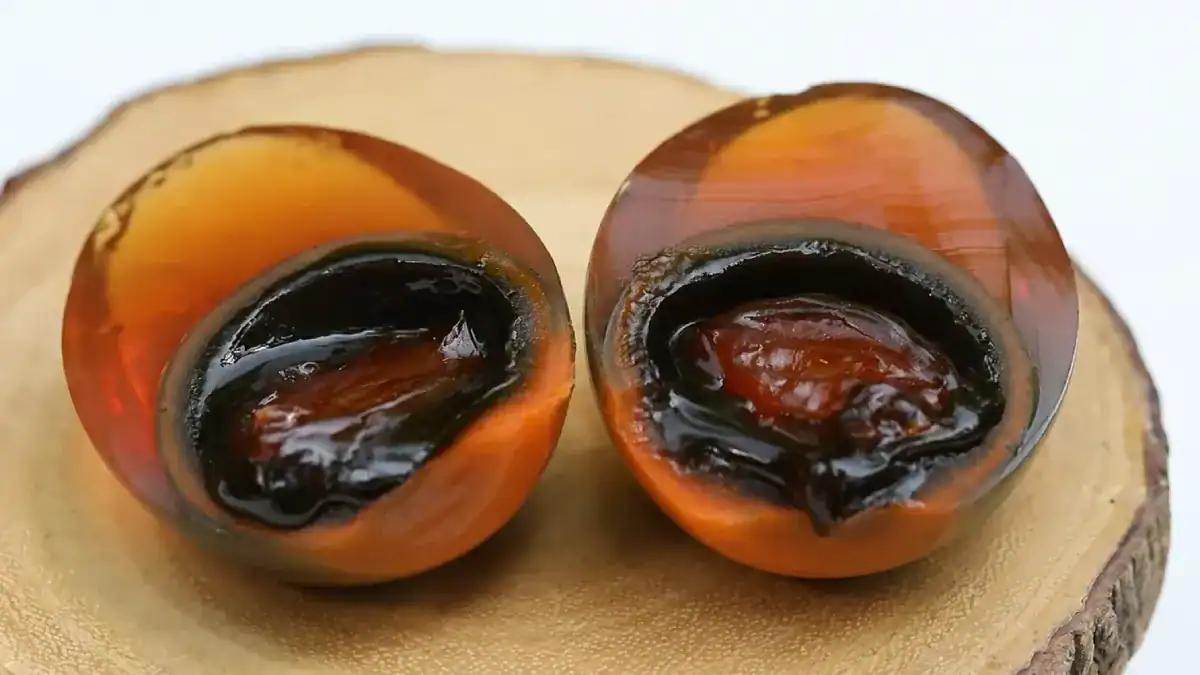
Century Eggs in Thailand
The originally clear egg white turns translucent, ranging in color from amber to dark brown. Its texture resembles firmer gelatin or gummy bears. Beautiful white crystalline patterns, resembling snowflakes or fern fronds, sometimes form on the surface due to the crystallization of salts. The yolk is dark green, gray-green, or nearly black in color. The center of the yolk has a creamy, runny to muddy consistency similar to soft cheese.
What does it taste like?
Well… I’ll start with a literal translation from Thai: Khai-Yiao-Ma, which means “Egg-Urine-Horse.” Loosely translated, it means “an egg peed on by a horse.” Of course, a more vulgar translation immediately comes to mind, but even without it, it’s clear that the name refers to the characteristic smell of ammonia and hydrogen sulfide—and also to the fact that this is simply one of those ultra-mega-super Thai delicacies you have to try.
But seriously, the egg white has a surprisingly delicate and clean flavor. It’s slightly salty and almost odorless. Since it contains no fat, it tastes more like salty gelatin with a light hint of tea.
The yolk has an extremely thick, rich, buttery, even creamy consistency. It resembles a very strong aged cheese (like Niva or Roquefort), combined with the flavor of real truffles. It leaves a long, deep aftertaste.
Meals
1. Pad Kra Pao Kai Yeaw Ma
Stir Fried Century Egg with Basil
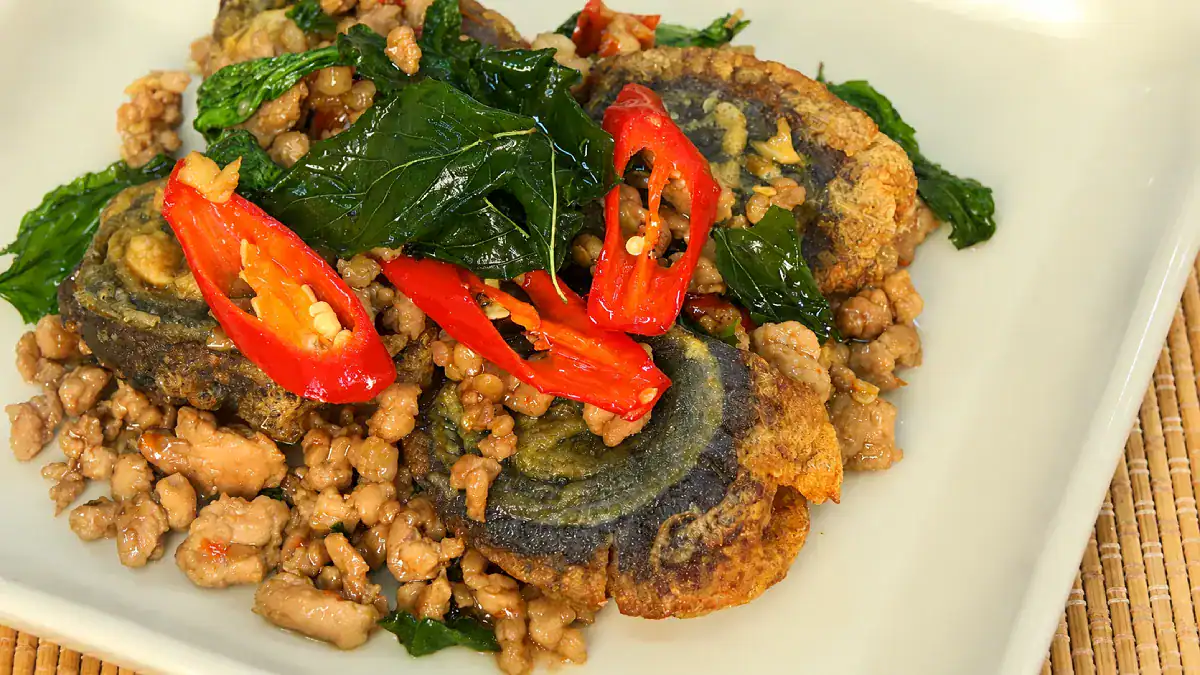
The most popular hot dish made with century eggs in Thailand. The eggs are breaded and fried until crispy, then stir-fried in a wok with ground meat (pork or chicken), plenty of garlic, hot chili peppers, and Thai basil.
2. Yam Khai Yiao Ma
Spicy Century Egg Salad
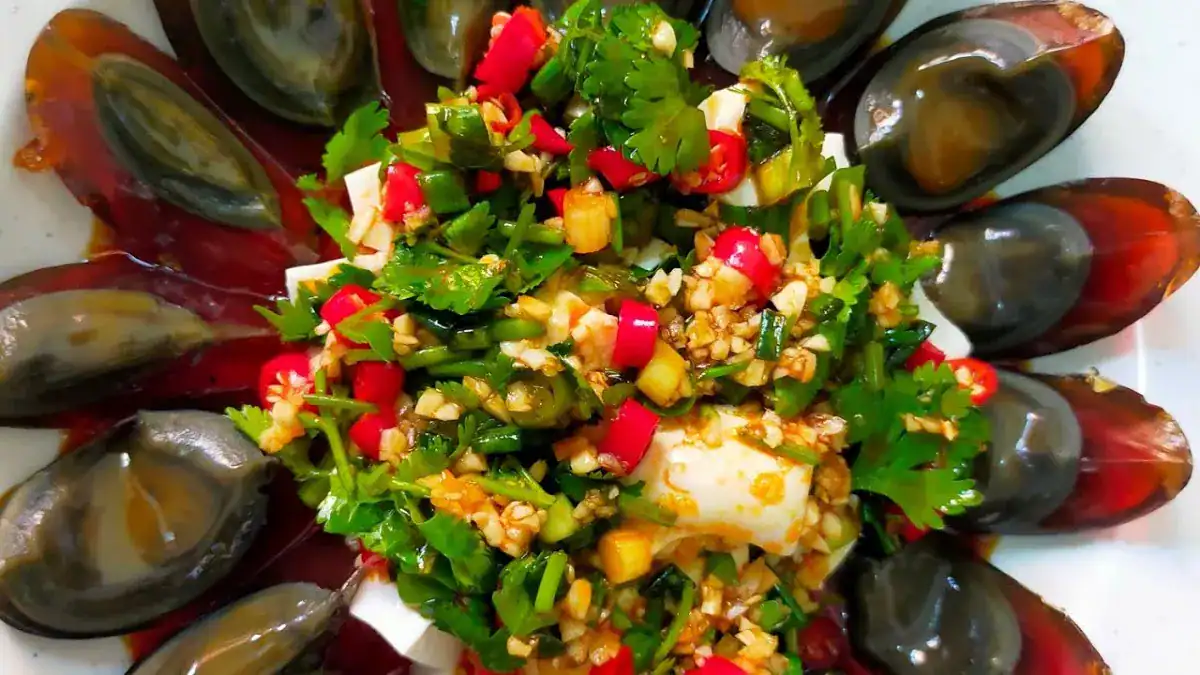
A traditional spicy and tangy salad. The eggs are sliced into wedges and tossed in a dressing made from lime juice, fish sauce, sugar, and fresh chili peppers. The dish is garnished with Thai shallots and cilantro and is often served with slices of pickled pink ginger.
3. Jok Khai Yiao Ma
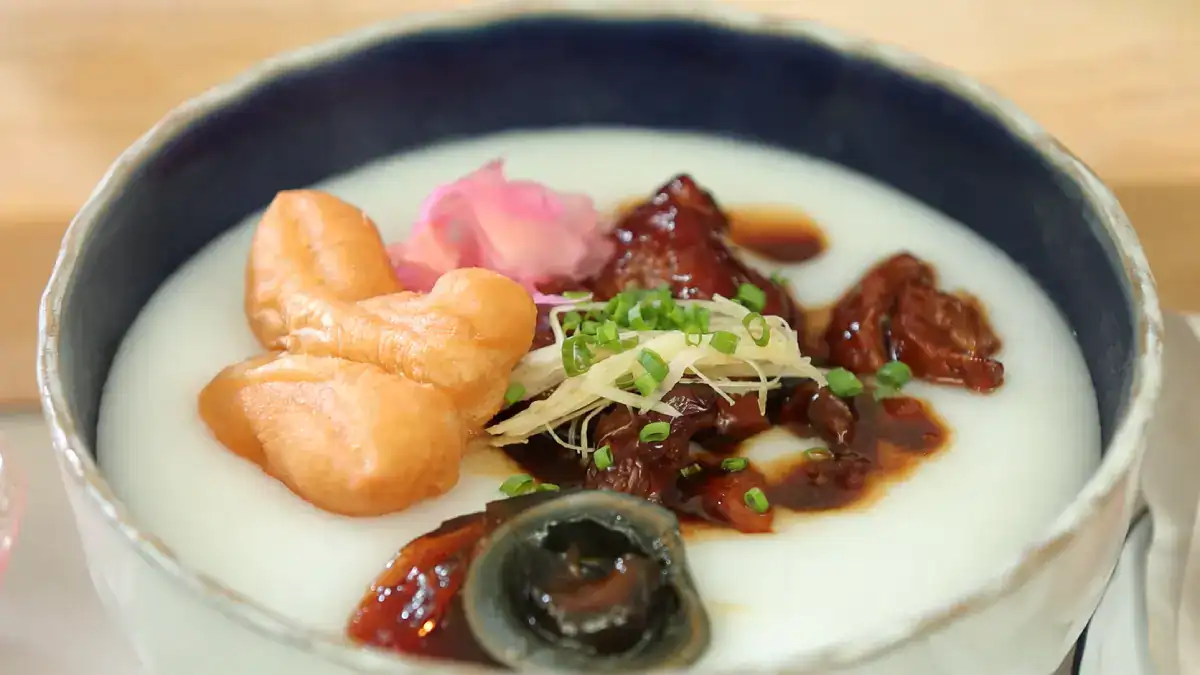
A thick, slow-cooked rice porridge eaten in Thailand as a typical Asian breakfast. The century egg is sliced directly into the hot porridge, where it melts slightly and gives the entire dish a creamy and rich flavor. It is often served with ground meat and fresh ginger
4. Khai Jiao Khai Yiao Ma
Crispy Omelet with Century Egg
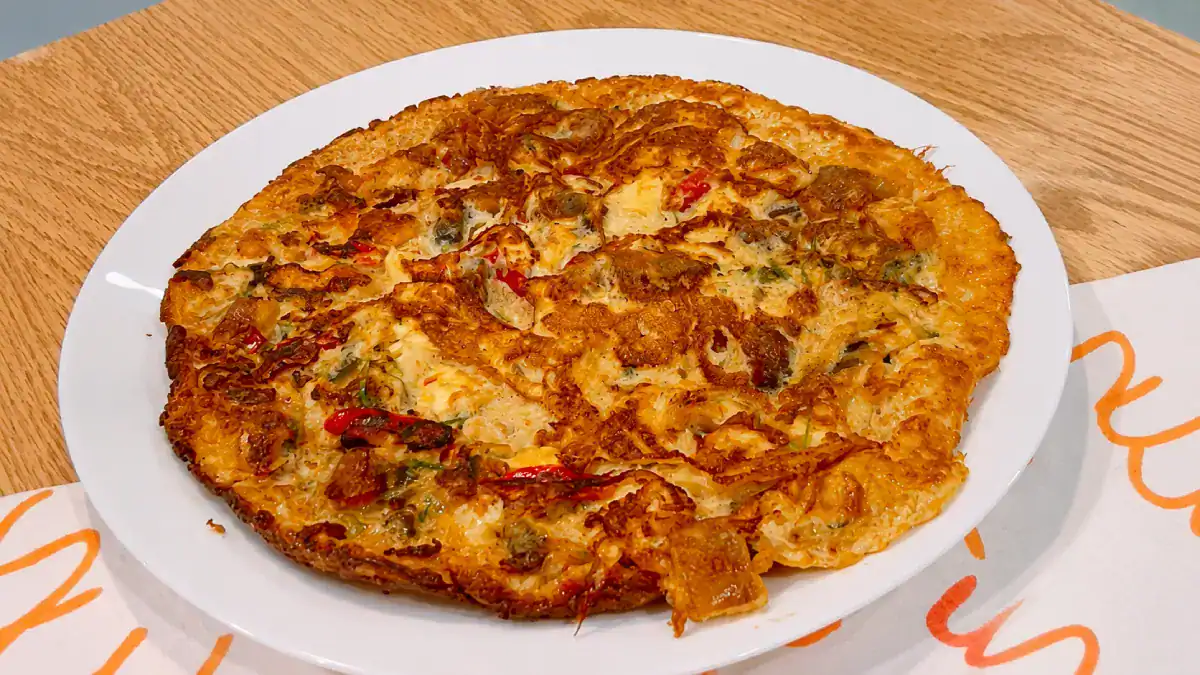
This Thai egg omelet is fried in a deep layer of oil, into which pieces of century egg are stirred before frying. The result is a fluffy, crispy omelet with an intense and creamy center.
Shopping
I’m guessing that after reading this article, you can’t wait to head to a restaurant to try this specialty—and on your way back to the hotel, you’ll stop by 7-Eleven to fill your cart with these beautiful, pink rotten eggs.
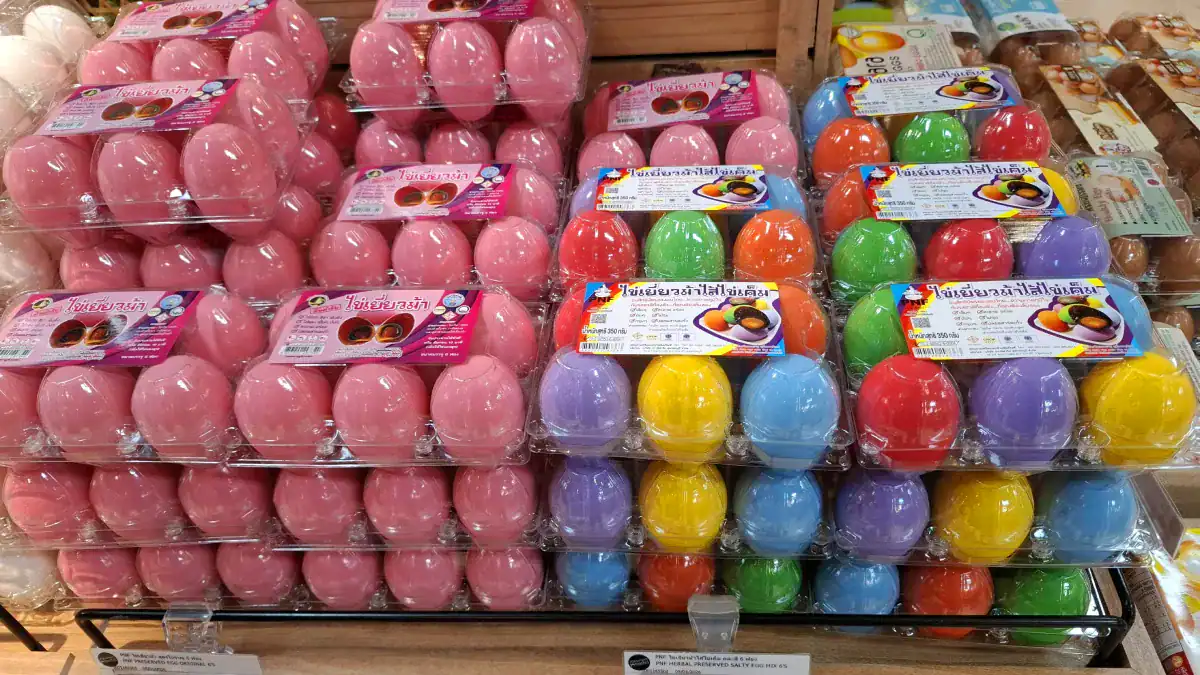
At 7-Eleven or in grocery stores, you’ll always find the expiration date on eggs, along with an important note stating that they do not contain lead. Some manufacturers add the infamous lead compounds to regulate pH, which help the egg white coagulate evenly. Therefore, century eggs may contain lead in the form of lead sulfide. If you find a “century egg” with a cloudy, opaque egg white, you should avoid eating it.
Finally, let’s try to figure out what these Thai food magicians are actually making from eggs. What does the packaging look like, what’s inside, how do you eat it, and how does it differ from other decorated eggs:
1. Century eggs – the original
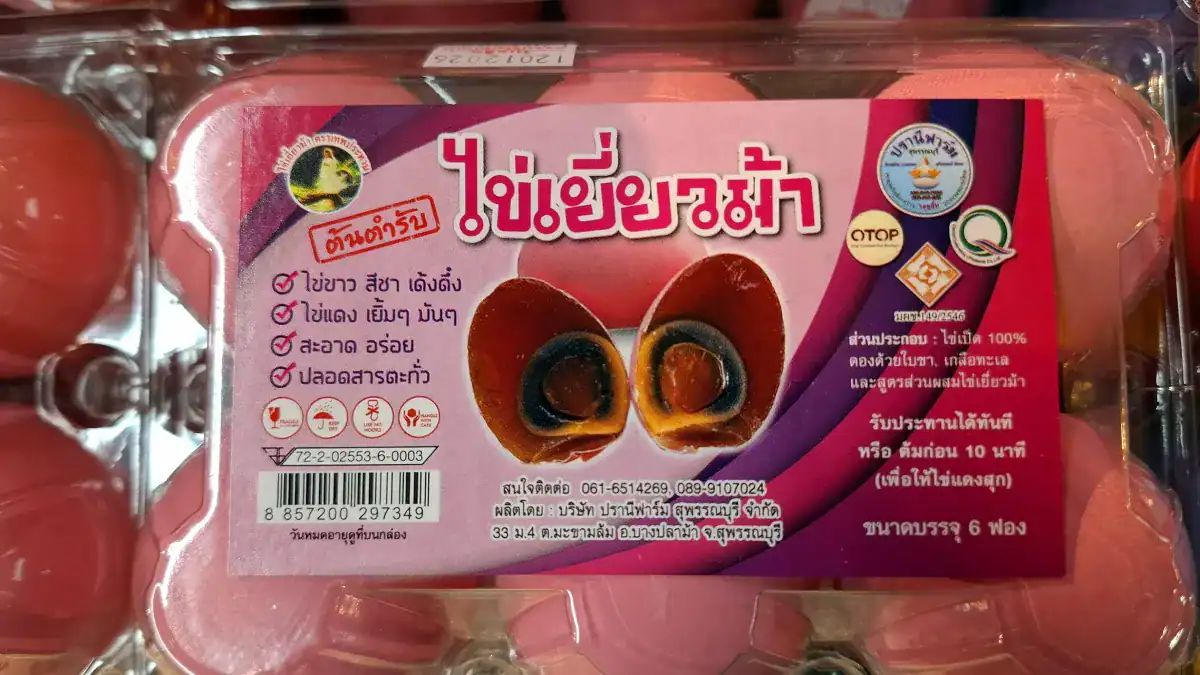
- Traditional (original) recipe.
- The egg white is tea-colored and elastic.
- The yolk is creamy and oily.
- You can eat them right away or boil them for 10 minutes.
- Duck eggs marinated in tea leaves, sea salt, and a secret blend.
- Lead-free.
2. Century Eggs with Salted Yolk
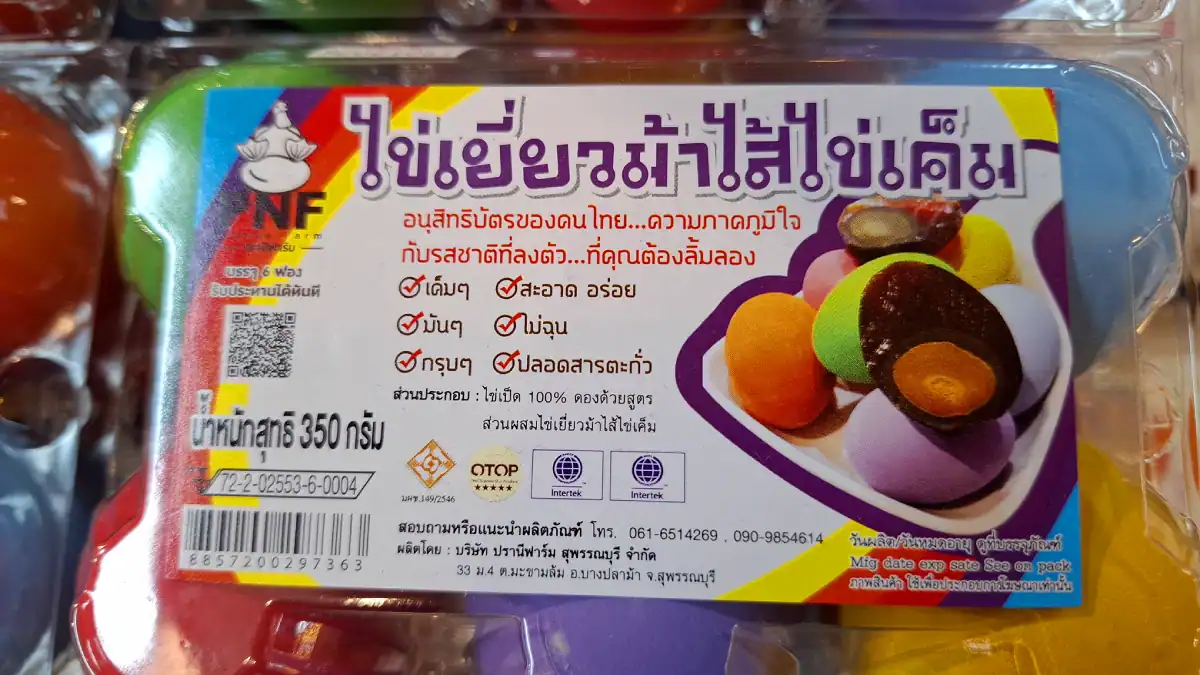
This is a new, modern, improved, and faster version of the traditional century egg. The manufacturer uses a slightly different recipe: The brine consists of 5 parts salt, 3 parts lime, dried tea, and herbal powder made from the plant green chiretta (known as Fah Talay Jone). Duck eggs are immersed in this solution and left to cure for 30 days. They are then steamed for 6 hours. The extremely slow and prolonged cooking process solidifies the yolk and removes the ammonia odor from the eggs.
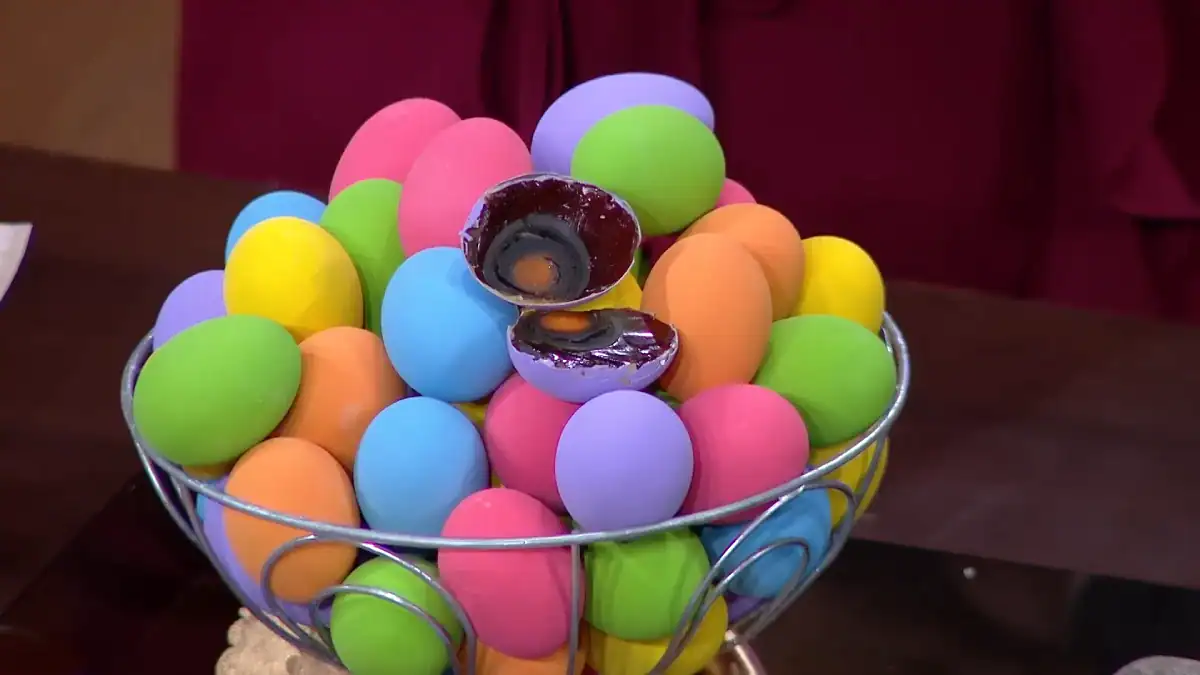
- Modern century eggs
- The egg white is the color of strong tea and has a springy texture.
- The yolk is firm, hard-boiled, and salty.
- You can eat them right away because they’re already cooked.
- They have no odor.
- Lead-free.
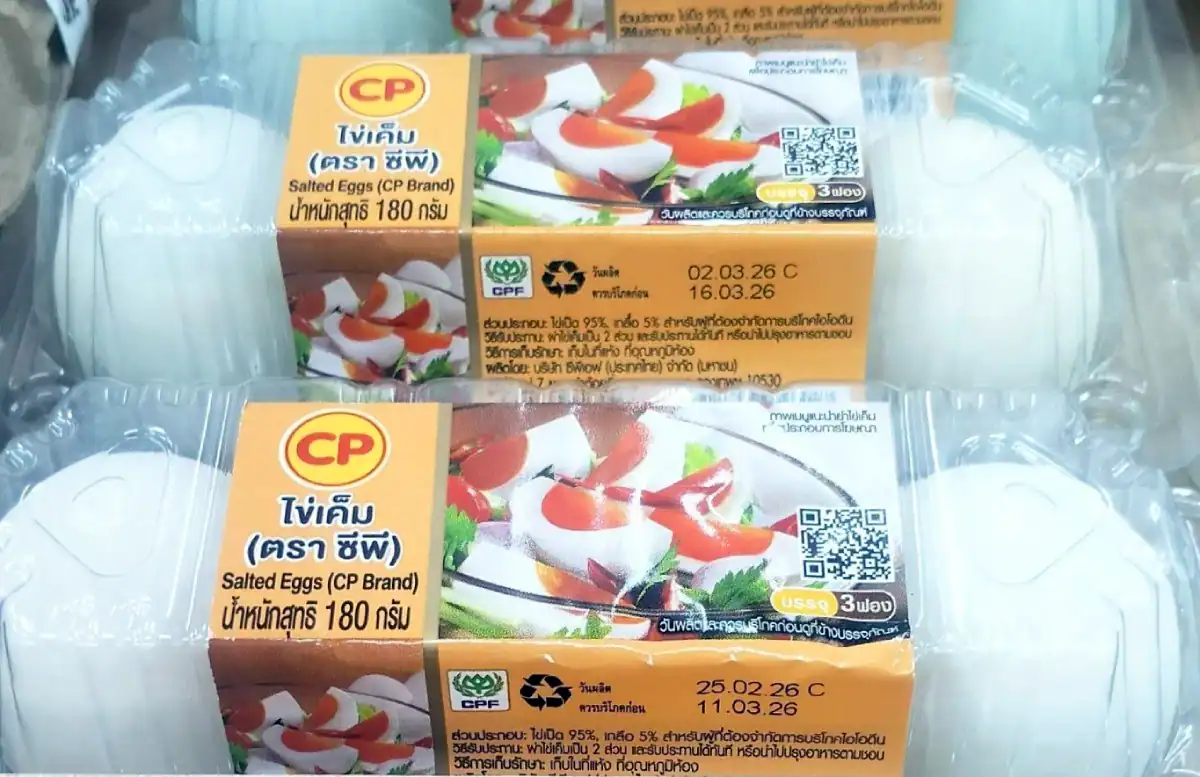
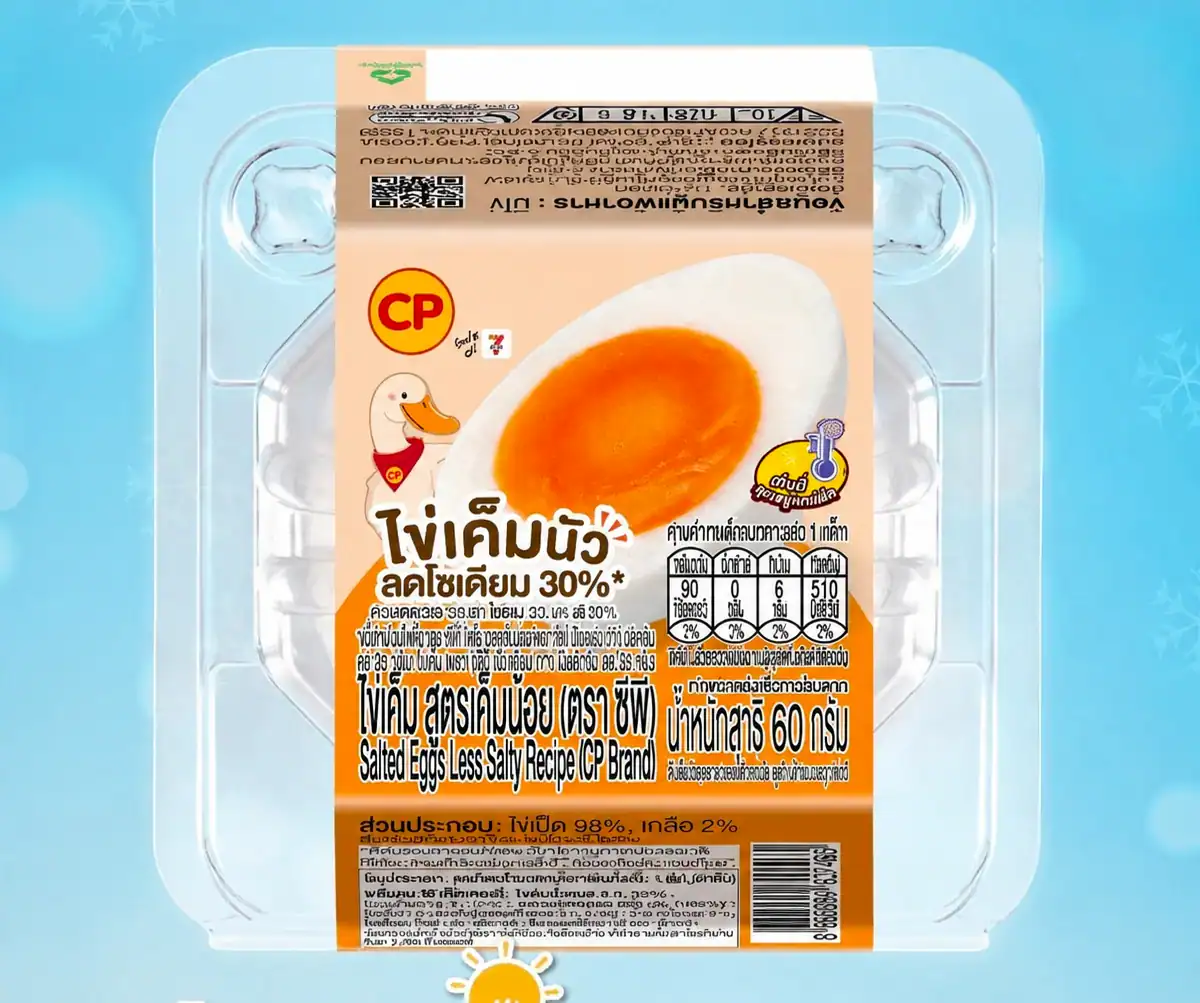
3. Salted Eggs
Another common item found at 7-Eleven and Thai markets is salted eggs. These are not century eggs, but rather eggs that have been soaked in a salt solution for 2–4 weeks and then boiled. So if you buy them, they are meant for immediate consumption. The first picture shows traditional salted duck eggs with a 5% salt content; the second shows ones with a reduced salt content of 2%.
I wish everyone the best of luck and hope you enjoy exploring exotic Thailand.
Links:
- wendi – author of the article and tour guide (Cambodia, Thailand, and Laos)